

About Client
DEEPIQ simplifies industrial analytics and offers the only self-service application for end-to-end (Data + AI) OPs for the industrial world. With this app, your SMEs can digitize their expertise, and your data teams can build and deploy robust analytic pipelines.
- https://deepiq.com/
- Location: Have Offices Globally in USA, India, Canada
Project Background
DeepIQ required a proof-of-concept integration layer to extract Vendor master data and Work Order information from their SAP system and expose it to external applications. The goal was to evaluate viable integration patterns — SOAP, REST, BAPI/RFC — and deliver a working, reusable service layer that could be extended to production.
The project was executed by Peritos Solutions under a phased delivery model, beginning with an assessment and requirement-gathering sprint before moving into build and testing phases.
Scope & Requirements
In Scope
- Integration of Vendor master data (list and detail) from SAP
- Work Order data retrieval filtered by vendor number and date range
- Custom BAPI development with up to 10 input fields and up to 50 output fields
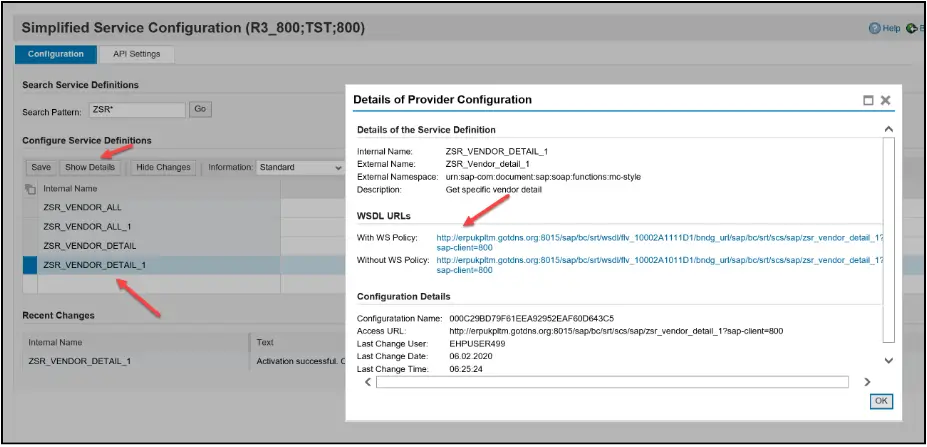
- SOAP web service (WSDL) exposure via SAP transaction SE37 / simplified web service
- REST-based service exposure via SAP SICF (z_ven_wrk_ords)
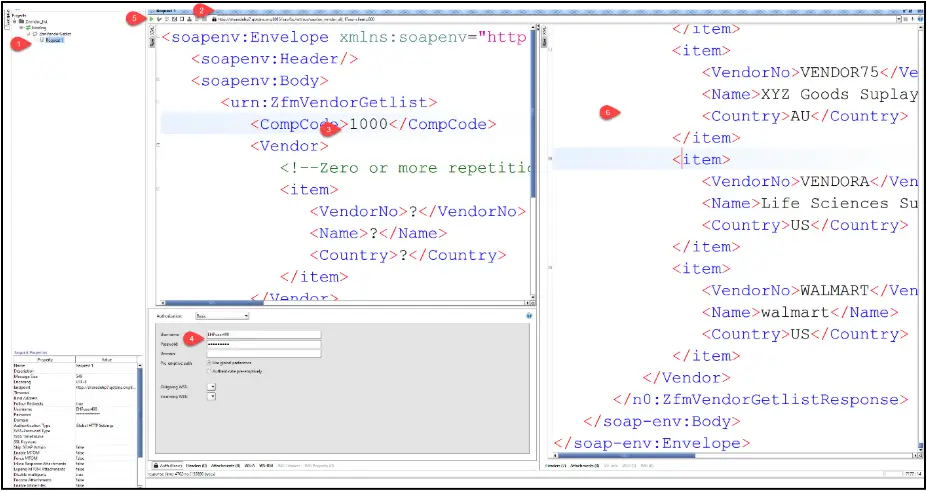
- Unit testing via SOAP UI and Postman
- JSON output serialisation using /ui2/cl_json
- 1 week of post-delivery hypercare support
Out of Scope
- Production deployment and middleware (Informatica/MuleSoft) configuration
- Customer master beyond the agreed POC scope
Project Timelines
| Phase | Duration | Key Deliverables | Status |
| Assessment | < 2 wks | Requirement gathering, SAP system access, Risk & Gap Analysis, Customised Assessment Report | Done |
| Phase B | 2–3 wks | Custom BAPI design, ABAP OOP coding, WSDL web service exposure, SOAP UI unit testing | Done |
| Phase C | 2–3 wks | REST-based SICF service (z_ven_wrk_ords), JSON output, Postman testing, 1-week support | Done |
| Hypercare | 1 wk | Post-go-live support, bug fixing, documentation handover | Done |
Results & Impact
Observability & Visibility
Assessment Report
A comprehensive assessment was completed in under two weeks. This included:
- Risk & Gap Analysis — identifying SAP version constraints, authentication settings, and BAPI structural gaps
- Customised Assessment Report — delivered to the client with architecture recommendations and approach sign-off
- Integration approach validated against SAP R/3 / S/4HANA constraints before any code was written
Cloud Formation
Integration — Delivered in < 2 Weeks per Phase
Each integration phase was scoped, built, and tested in a rapid sprint cadence:
- Phase B — SOAP/WSDL: Custom BAPI (Z_VEN_WRK_ORDS) created with ABAP OOP, exposed as a simplified web service. Vendor list and detail endpoints validated via SOAP UI.
- Phase C — REST: Wrapper class implementing IF_HTTP_EXTENSION registered as a SICF service. JSON responses verified via Postman for vendor list, vendor detail, and work-order queries.
Key Outcome Metrics
| ✔ Observability & Visibility
Full assessment report delivered with risk & gap analysis within 2 weeks. |
☁ Cloud-Ready Integration
REST & SOAP web services exposed from SAP — ready for cloud consumption. |
⚡ Rapid Time-to-Value
Custom BAPI developed & tested end-to-end in under 8 weeks. |
Implementation
Architecture Overview
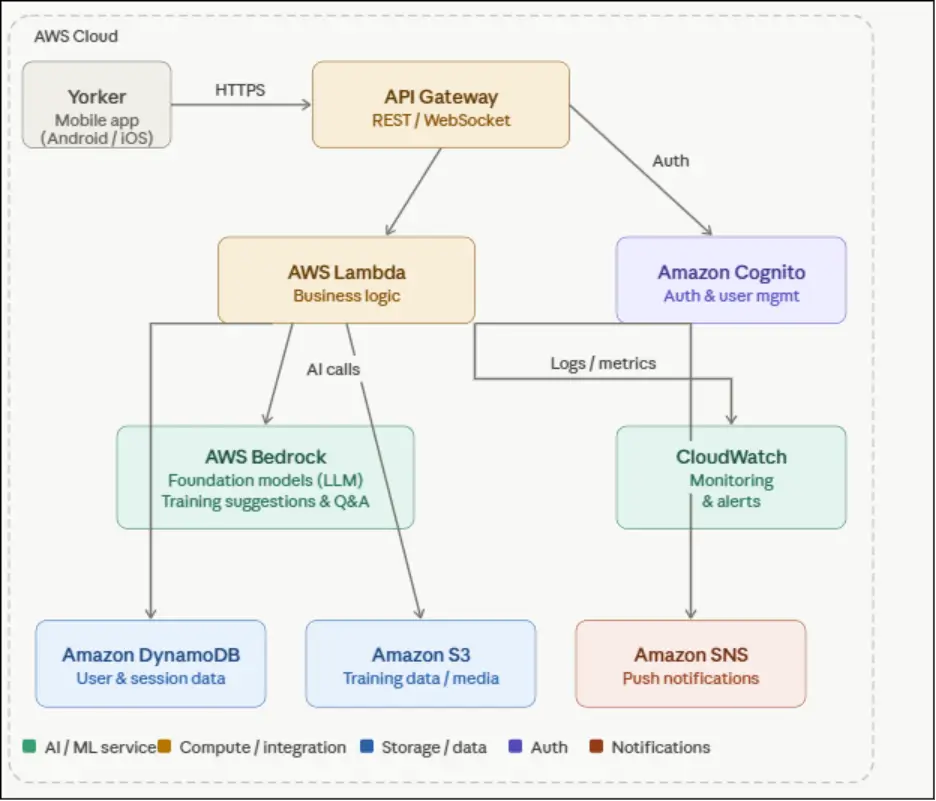
Below is a high level Architecture Diagram overview
Technology & Architecture
| SAP Core | SAP R/3 · S/4HANA | ABAP OOP | BAPI / RFC |
| Integration | SOAP Web Services (WSDL) | REST / HTTP (SICF) | JSON |
| Tooling | SOAP UI | Postman | Informatica ETL |
| Data Scope | Vendor Master | Customer Master | Work Orders |
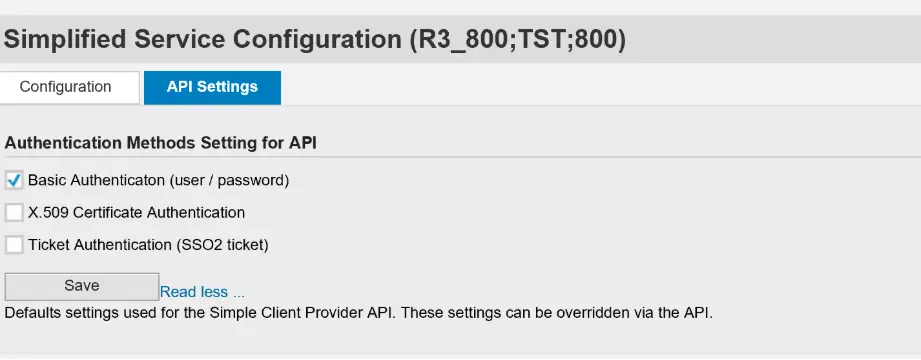
| Auth | HTTP Basic Auth | Service User credentials |
| Output Format | JSON (serialised via /ui2/cl_json) | XML / WSDL |
Challenges
Authentication Configuration
SAP’s web service authentication settings required careful tuning. Multiple configurations were tested before identifying the correct combination of HTTP handler and service user credentials that allowed external SOAP calls to succeed.
Date Filter Logic
Initial work-order retrieval returned data outside the requested date range. The ABAP selection logic was corrected to enforce strict date boundary matching (GSTRP GE i_start AND GSTRP LE i_end), and output dates were reformatted to DD/MM/YYYY.
Vendor Number Formatting
Vendor numbers required CONVERSION_EXIT_ALPHA_OUTPUT normalisation to strip leading zeros and match expected formats in the consuming application.
Compressed Timeline
All three phases were delivered in parallel with the client’s internal scheduling constraints, requiring iterative development with 2–3 day feedback cycles and daily stand-ups.
Key Benefits
- Reusable service layer — both SOAP and REST endpoints can be extended to additional SAP objects without re-architecture
- Zero middleware dependency — services are natively exposed from SAP, removing Informatica licensing requirements for the POC
- Rapid time-to-value — working, tested integration delivered in under 8 weeks from initial engagement
- Comprehensive documentation — WSDL definitions, ABAP code bundle, unit test evidence, and architecture notes handed over at project close
- Clean handover — 1-week hypercare period with all bugs resolved (100% test pass rate)
Post-Go-Live Support
Hypercare Period
A dedicated one-week hypercare period was included post-delivery. During this period DeepIQ resolved all outstanding defects, provided guidance on SAP navigation, and completed final documentation. All six functional test scenarios and both raised bugs were closed with a Pass status before handover.
Application screenshots are included below as placeholders — replace with actual Postman / SOAP UI test captures.
About Client
Electric Kiwi is an autonomous online New Zealand electricity retailer. Established in 2014, Electric Kiwi uses cloud computing and intelligent meters to service customers nationwide in major urban areas. Its services depend on the presence of the smart meters in the customer’s home. For the client, we did the POC for integrating AWS Support Services with Datadog’s CloudFormation template.
- http://www.electrickiwi.co.nz/
- Location: New Zealand
Project Background
The case study of the project provides a synopsis of how we did the POC for the client for integrating AWS Support Services, an AWS account with Datadog employing Datadog’s CloudFormation template. Creating an IAM role and associated policy enables Datadog’s AWS account to make API calls for collecting or pushing data into your AWS account. Using the CloudFormation template supplies all the tools required to send this data to your Datadog account, and Datadog helps the CloudFormation template to provide the latest functionality. The template even deploys the Datadog Forwarder Lambda operation for sending logs to Datadog.
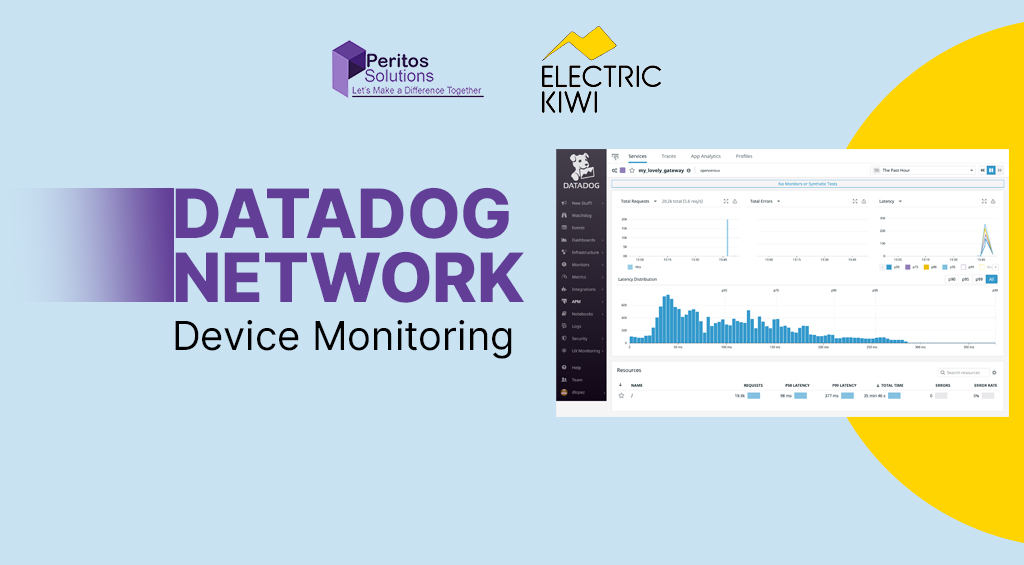
After setting the initial connection, enable the individual AWS service integrations appropriate to your AWS domain. With a single click, Datadog provisions the required resources in your AWS account and starts analyzing the metrics and events for the services you use. For general AWS services you are using, Datadog needs out-of-the-box dashboards providing prompt and customizable visibility. The project background demonstrates setting up the integration and establishing the Datadog Agent on an Amazon Linux EC2 instance and feeds a broad outline of the integration’s capabilities. Visit the Enable integrations for individual AWS service factions for a list of the general sub-integrations.
This procedure can be repeated for multiple AWS accounts as required, or you can also use the API, AWS CLI, or Terraform to set up various accounts simultaneously. For more details, read the Datadog-Amazon CloudFormation guide.
Scope & Requirement
The scope & requirements involved the following:
- Datadog integration with AWS support services to measure and accomplish observability matrix
- Identified costing
- Updated pricing with partner discount as applicable
- Shortlisted services for which we did POC
- EC2, database Monitor Requirement, Steps, and Dashboard View
- Along with pricing and cost for using Datadog; for monitoring and analytical purpose
Implementation
Technology and Architecture
Technology/Services used
We used Datadog integration with AWS services to masure and do observability matrix and helped them to setup below
- Cloud: AWS
- Shortlisted services for which we did POC
- Organization setup: Control tower
- Policies setup: Created AWS service control policies
- Templates created for using common AWS services
Security & Compliance:
- Tagging Policies
- Azure config for compliance checks
- NIST compliance
- Guardrails
- Security Hub
Backup and Recovery
- AWS Backup provided a simple, secure, cost-effective, and cloud-based backup solution which was already implemented for the client
Network Architecture
- Site to Site VPN Architecture using Transit Gateway
- Distributed Azure Network Firewall
- Monitoring with Cloud Watch and VPC flow logs.
Cost Optimization
- Alerts and notifications are configured in the AWS cost
- Identified Costing
- Updated pricing with partner discount as applicable
Code Management, Deployment
- Cloudformation scripts for creating stacksets and scripts for generating AWS services was handed over to the client
Challenges
- Access was not provided to the actual environment and setting up
- Complex environment setup and monitoring for production cost was only possible to evaluate if we have got the access for the actual environment from the client
Support
- 1 month of extended support
- A template for Cloud formation stack to create more AWS resources using the available stacks
- Screen-sharing sessions with a demo of how the services and new workloads can be deployed.