


About Client
The world today is witnessing a growing trend in the use of technology in the health sector. This allowed us to assist our client, a pharmaceutical company in tracking medical devices and the quality of medicines on the go along with the inventory and transit status, and we supported them in AWS to IoT integration.
Project Background
In this case study, we achieved the following:
- How we implemented a small AWS IoT integration application with a toolkit to assure product quality, elevate the efficiency of medical devices, and raise alerts in case manual intervention is required
- Set up AWS for the application to manage the devices seamlessly
- Interaction with the device to fetch vital information
- Finally, creating a mobile application and using AWS IoT to monitor the devices
Scope & Requirement
We used the below solution components to create a responsive web application that gives a holistic view of all the devices connected to the system and information on their vital parameters.
Implementation
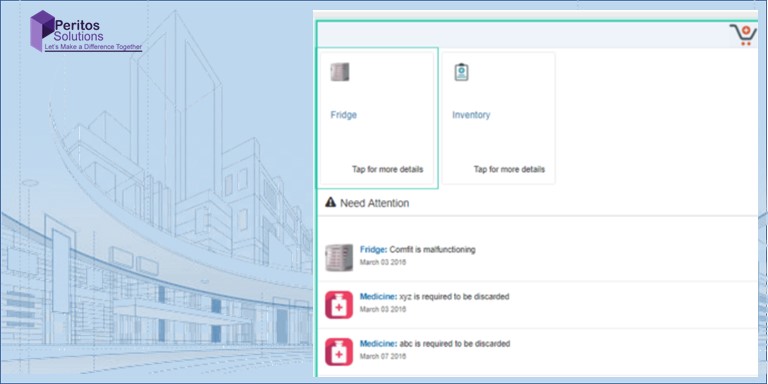
Technology and Architecture
Technology/ Services used
We used AWS services and helped them to setup below
- Cloud: AWS
- Organization setup: Control tower
- AWS SSO for authentication using existing AzureAD credentials
- Policies setup: Created AWS service control policies
- Templates created for using common AWS services
Security & Compliance:
- Tagging Policies
- AWS config for compliance checks
- NIST compliance
- Guardrails
- Security Hub
Network Architecture
- Site to Site VPN Architecture using Transit Gateway
- Distributed AWS Network Firewall
- Monitoring with Cloud Watch and VPC flow logs.
Backup and Recovery
Cloud systems and components used followed AWS’s well-Architected framework and the resources were all Multi-zone availability with uptime of 99.99% or more.
Cost Optimization
Alerts and notifications are configured in the AWS cost
Code Management, Deployment
Cloudformation scripts for creating stacksets and scripts for generating AWS services was handed over to the client
Challenges
- We encountered some issues as below:
- AWS setup and pricing were complicated to understand as it is based on usage and consumption, which was a difficult thing to assess at the start of the application
- Ensuring data privacy and security is of utmost importance in this case. Since devices can be hacked without much effort due to poor encryption and that could allow unauthorized access
- Impeccable quality assurance of the whole setup was to be achieved in this case of the pharmaceutical industry, which involves dealing with medicines are surgical instruments, so there was a need for honest sharing of information if anything was not going as expected.
- Understanding the client’s vision of how they needed the UI was challenging.
Support
- 1 month of extended support
- A template for Cloud formation stack to create more AWS resources using the available stacks
- Screen-sharing sessions with a demo of how the services and new workloads can be deployed.
About Client
AWS Compute & High-performance Computing
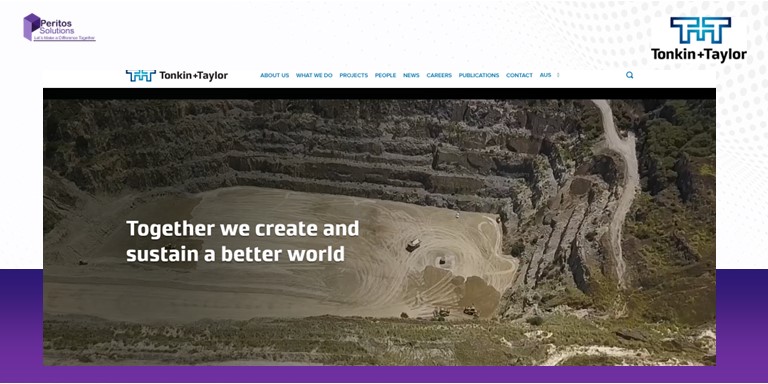
Tonkin + Taylor is New Zealand’s leading environment and engineering consultancy with offices located globally. They shape interfaces between people and the environment, which includes earth, water, and air. Additionally, They have won awards like the Beaton Client Choice Award for Best Provider to Government and Community-2022 and the IPWEA Award for Excellence in Water Projects for the Papakura Water Treatment Plan- 2021.
- https://www.tonkintaylor.co.nz/
- Location: New Zealand
Project Background
Tonkin + Taylor were embarking on launching a full suite of digital products and zeroed upon AWS as their choice for a cloud environment. Moreover, They wanted to accelerate their digital transformation and add more excellent business value through AWS Development Environment best practices. To achieve all this, we needed to configure AWS Compute & High-Performance Computing, following best practices and meeting compliance standards, which can serve as a foundation for implementing more applications. Furthermore, The AWS Lake House is a central data hub that consolidates data from various sources and caters to all applications and users. It can quickly identify and integrate any data source. The data goes through a meticulous 3-stage refining process: Landing, Raw, and Transformed. Additionally, After the refinement process, it is added to the data catalog and is readily available for consumption through a relational database.
Scope & Requirement for AWS Compute & High Performance Computing
The 1st Phase of the AWS Environment Setup discussed implementation as follows:
- Implement Data Lakehouse on AWS
Implementation
Technology and Architecture of AWS Compute & High Performance Computing
The 1st Phase of the AWS Environment Setup discussed implementation as follows:
Technology/ Services used
We used AWS services and helped them to setup below
- Cloud: AWS
- Organization setup: Control tower
- AWS SSO for authentication using existing AzureAD credentials
- Policies setup: Created AWS service control policies
- Templates created for using common AWS services
Security & Compliance:
- Tagging Policies
- AWS config for compliance checks
- NIST compliance
- Guardrails
- Security Hub
Network Architecture
- Site to Site VPN Architecture using Transit Gateway
- Distributed AWS Network Firewall
- Monitoring with Cloud Watch and VPC flow logs.
Backup and Recovery
Cloud systems and components used followed AWS’s well-Architected framework and the resources were all Multi-zone availability with uptime of 99.99% or more.
Cost Optimization
Alerts and notifications are configured in the AWS cost
Code Management, Deployment
Cloudformation scripts for creating stacksets and scripts for generating AWS services was handed over to the client
AWS Compute & High Performance Computing Challenges & Solutions
- Diverse data sources- Data Analytics and cleaning up and integration patterns to pull data from different data sources
- On-premise data connection to data lake migration- Site-to-site Secure AWS connection was implemented
- Templatized format for creating pipelines- Created scripts of specific format, Deployment scripts, and CI CD scripts
Support
Providing ongoing support as we are a dedicated development partner for the client
Next Phase
We are now looking at the next phase of the project, which involves:
- API and file-based data sources to be added
- Process data to be used in different applications for ingesting in other applications
About Client
Global Finance is a company based in Auckland which provides smart loan and insurance solutions from 1999. The company suggests the right insurance with optimized premiums and support at claim time.
They have won top New Zealand’s awards from 2012 to 2018 including Mortgage Advisor of the Year, Business and Commercial Advisor of the Year and Values Business Partners from ANZ Bank.
- https://www.globalfinance.co.nz/
- Location: Auckland, New Zealand
Project Background- Dynamics for financial services
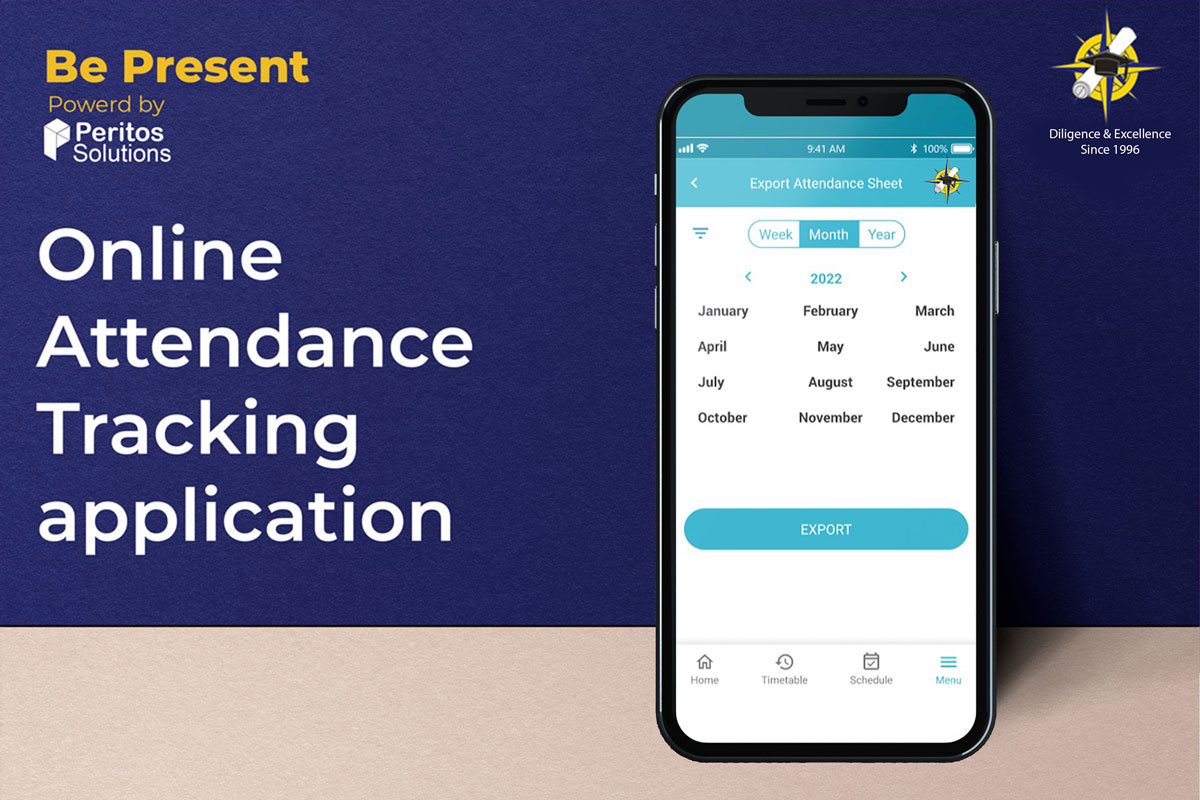
Peritos and Global Finance collaborated to change and manage their CRM Dynamics for financial services. They wanted the CRM and Customer support module to be compatible with their business processes. Peritos also discussed PDF customizations and the change of email preview as a Microsoft Solutions Partner. The Dynamics 365 for CRM and Suppoort Module were implemented in a multi-environment stage. Project Involved Dynamics 365 CRM and Customer support model
Scope & Requirement of the Dynamics for financial services
Technology and Architecture
Technology
- Backend Code: Plugins, JavaScript, Azure Blob
- Cloud: Microsoft Azure
Integrations
- Migration from an on-premise previous CRM system to the new Dynamics system and also 2 way integration
- Single Sign-on using Active Directory
- Email notifications and outlook based integration
Security:
- Migration from an on-premise previous CRM system to the new Dynamics system and also 2 way integration
- Single Sign-on using Active Directory
- Email notifications and outlook based integration
Backup and Recovery
Cloud systems and components used in the Dynamics were all 99.99% uptime and also involved with regular backup and DR to the non Production environment
Scalability
Application is designed to scale 5X times the average load received in the 1st 6 months of its usage and all cloud resources are configured for auto-scaling based on the load
Cost Optimization
Alerts and notifications are configured in the system for any additional data storage and notified to client and Peritos Support team if budget is being exceeded. Peritos being a cloud partner is managing the environment for the client keeping a close watch on the cost and finding ways to optimize the same
Code Management, Deployment
- Code for the app is handed over to the client through Azur Devops and Commited to the Git Repo.
- CI/CD is implemented to automatically add, build and deploy any code changes
features of dynamics for financial services
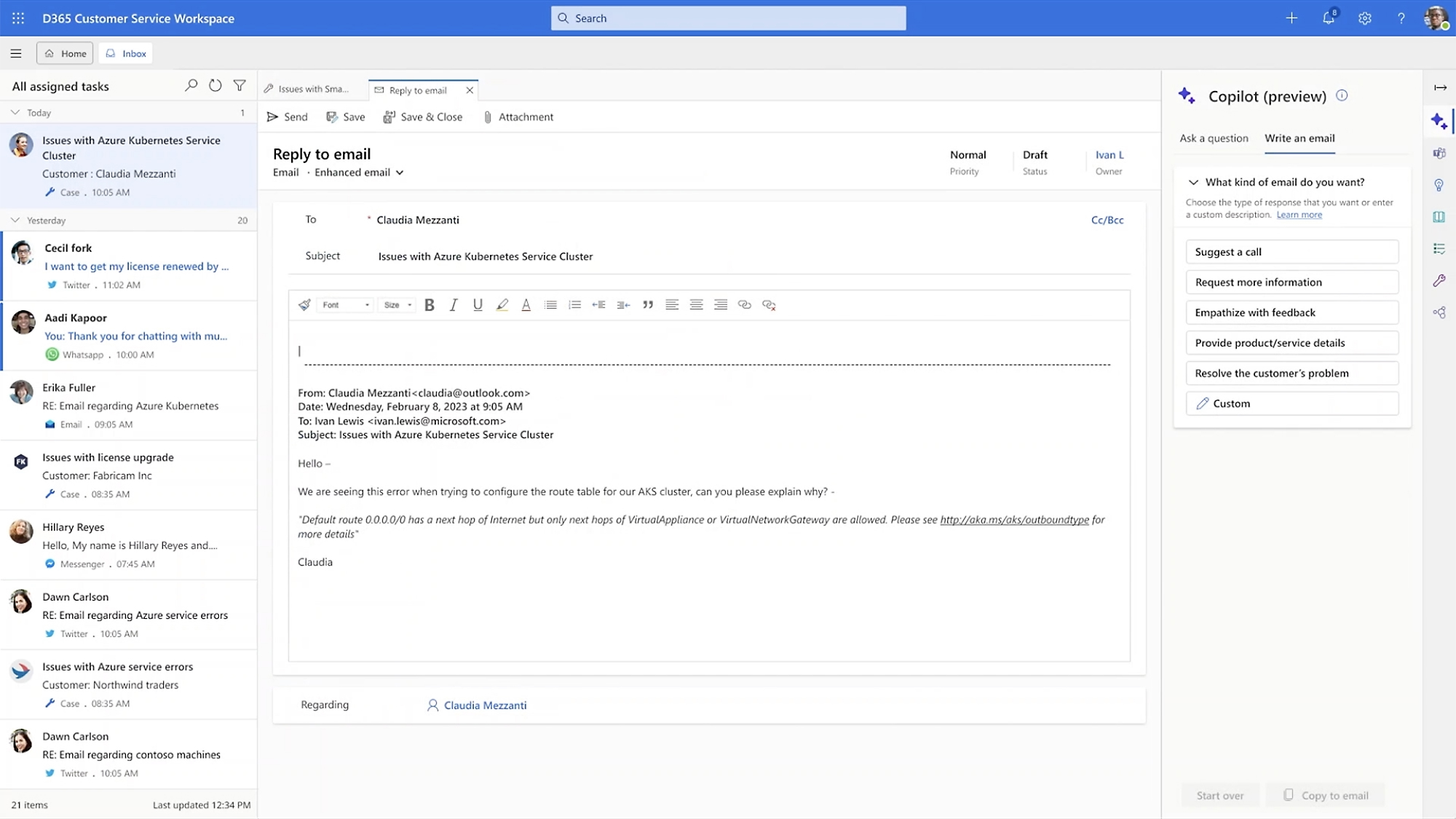
- The dynamics 365 for Customer Support and CRM has a unified interface
- It offers multi-select options with an intuitive control.
- The CRM dynamics for financial services comes with an advanced find option which filters views and form lists too.
- Quantity & Quality: Handled high-volume customer interactions, ensuring seamless case management with API-based integrations for financial services.
- On-Time & Budget: Delivered within six months, with all features deployed as per specifications and ongoing support.
Challenges
- They had done huge level of customizations understanding the existing code section.
- We took over the project after an existing provider left them so there were issues in terms of understanding the code, adding new code and ensuring that the flow of the existing work does not break.
- Multi environment setup was not done properly and we assisted to ensure the data and code are both setup based on recommended best practices.
Support
- Worked with the GFS client for more than 2+ years for ongoing Development and Support.
- The CRM Dynamics software helps us to take the next step in our business as we are looking to scale.
Next Phase
We are now looking at the next phase of the project which involves:
- Ongoing Support and adding new features every Quarter with minor bug fixes
- Further advanced integration with the Dynamics Features like Outlook based auto emails, Co Pilot etc
Executive Summary
About Client
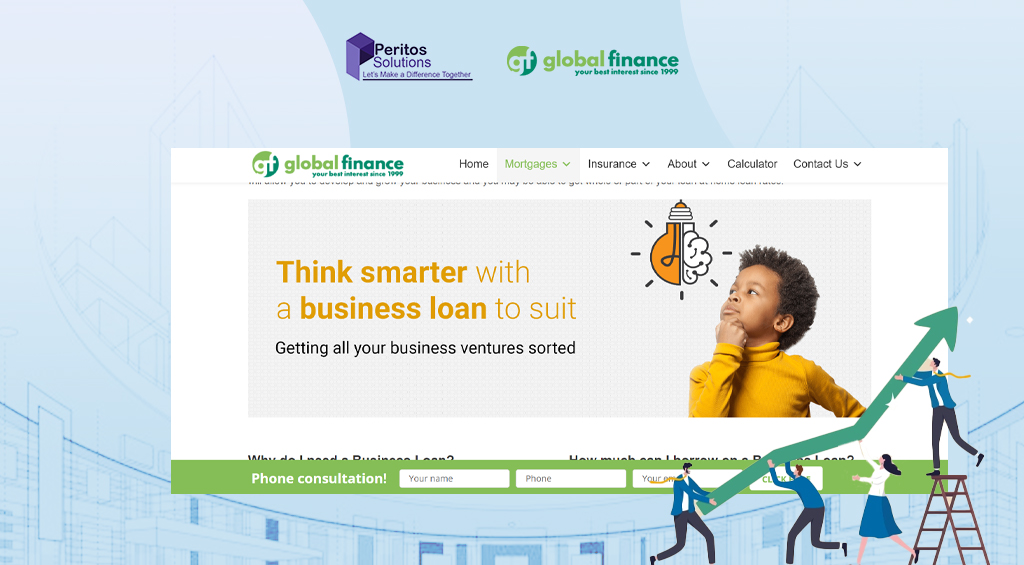
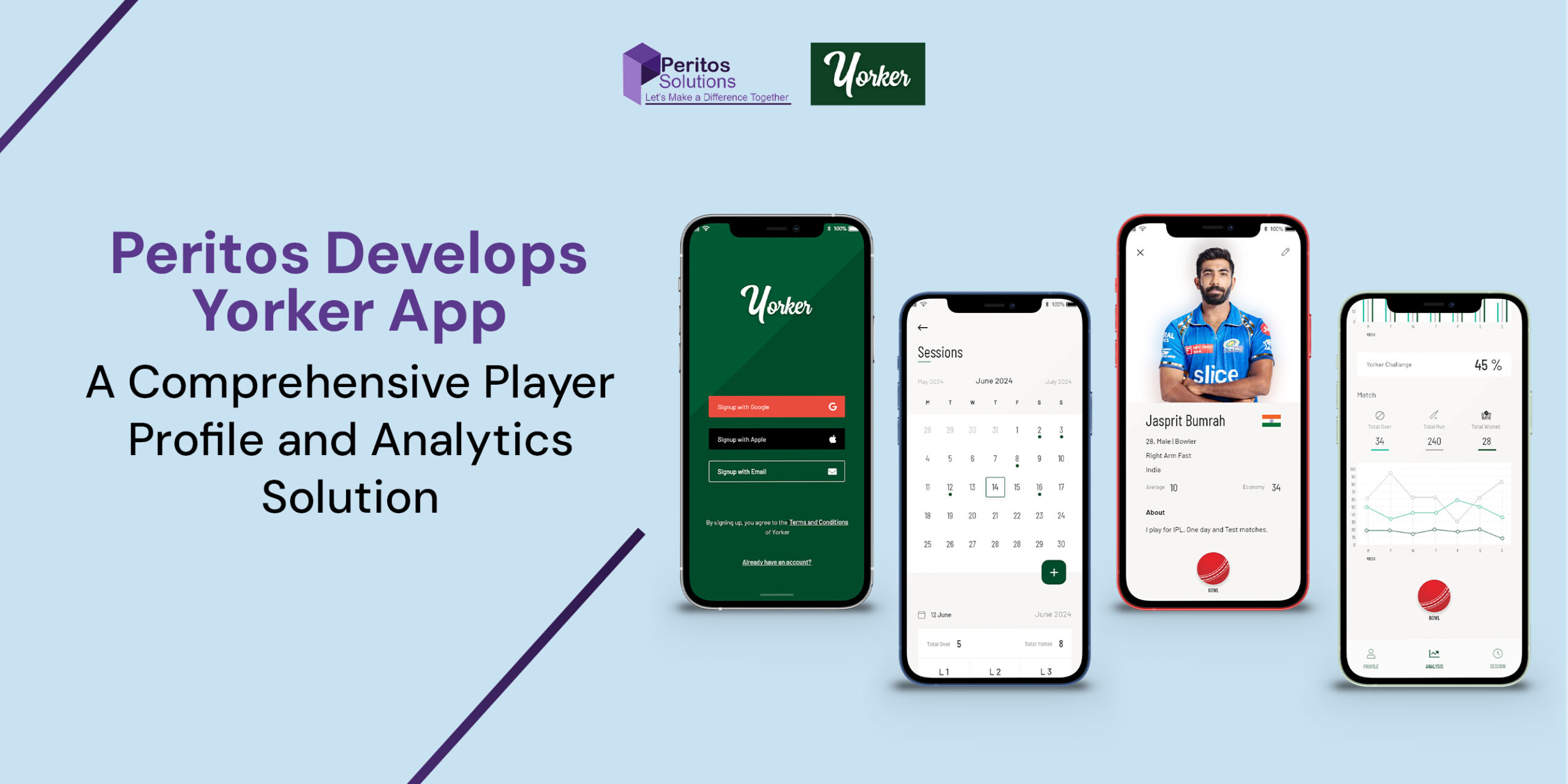
The client, Yorker, is focused on leveraging technology to address the challenge of tracking and managing cricket bowlers’ net practice bowling loads. Recognizing the risk of overtraining and injuries from improper tracking, therefore, Yorker aims to provide a digital solution tailored for cricket players. In addition, An AWS Custom Application for Yorker empowers bowlers to automate session recordings, create personalized training plans, and monitor progress effectively. The app also fosters a sense of community by enabling interaction, knowledge sharing, and participation in skill-building challenges. The project is being executed in multiple phases, beginning with a Minimum Viable Product (MVP) to establish a strong foundation for future improvements. Yorker’s commitment to innovation and user-centric design reflects its dedication to transforming how athletes manage their training and optimize performance while minimizing injury risks.
Project Background – Enhancing Cricket Training through Digital Bowling Load Management
The Yorker mobile app project addresses a major challenge for cricket bowlers: accurately tracking and managing their bowling loads during net practice. Without proper tracking, bowlers risk improper training regimens, leading to overtraining and injuries. The Yorker app offers a digital solution that automates session recordings, capturing key metrics like delivery count, types of deliveries, and intensity levels. Additionally, the app allows bowlers to create personalized training plans, track progress, and receive real-time alerts to avoid overexertion. By leveraging technology, this initiative not only helps reduce injury risks but also fosters a sense of community. Bowlers can share experiences, learn from experts, and engage in skill-enhancing challenges. Ultimately, the app aims to optimize performance while ensuring bowlers train safely and efficiently, revolutionizing the way athletes manage their training.
Scope & Requirement for AWS Custom Application For Yorker
Scope: The first phase of the Yorker mobile application focuses on developing a Minimum Viable Product (MVP) to establish a strong foundation. Specifically, this phase will deliver core functionalities to allow cricket bowlers to start tracking their training sessions and managing their profiles. The scope includes:
- User Authentication: Secure login and registration functionality for bowlers.
- Profile Management: Basic user profile setup, including personal details and preferences.
- Bowling Record Tracking: Automated entry for recording bowling sessions, including delivery count, types, and intensity.
- Basic Reporting: Simple reports summarizing bowling loads to help users monitor their progress.
Requirements:
- Mobile App Development: We will develop the front end using React Native to ensure cross-platform compatibility on iOS and Android.
- Backend Services: Built using .NET with RESTful APIs for data communication.
- Database: RDS Aurora PostgreSQL for structured data storage of user profiles and bowling records.
- CI/CD Pipeline: Set up Continuous Integration/Continuous Deployment processes for efficient development and release.
- User Interface Design: Intuitive and user-friendly UI aligned with branding, focusing on easy data entry and report viewing.
Implementation
Technology and Architecture for AWS Custom Application For Yorker
Read more on the technology and Architecture we used for AWS Custom Application Development
Technology
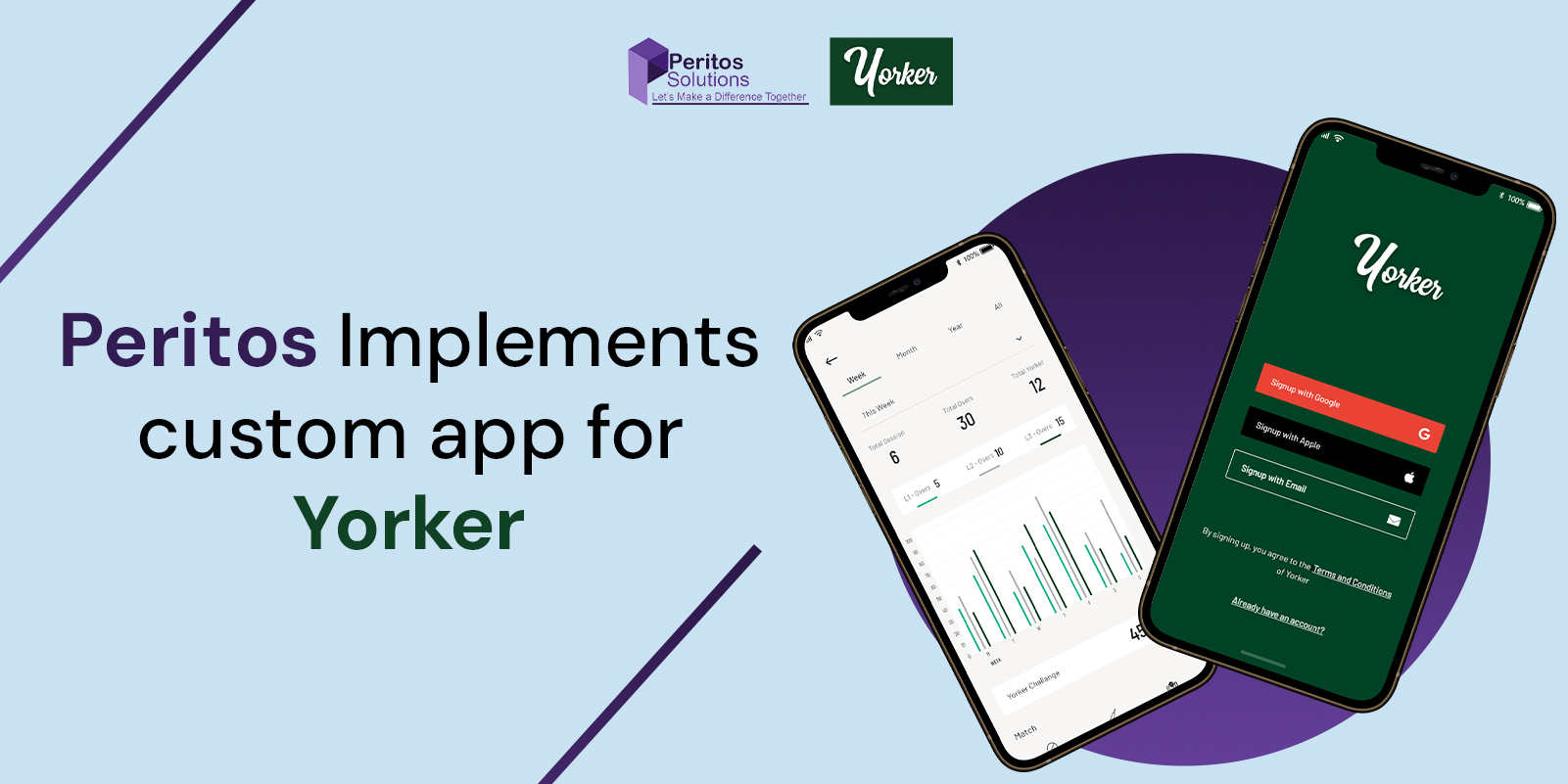
- WAF, API Gateway, Lambda Functions, RDS, S3, CloudWatch, Secrets Manager
Scalability
- The app is designed to run on serverless services, allowing automatic scaling based on usage.
Integrations
The application leverages RESTful APIs for smooth data transfer between the front end and back end, facilitating user authentication, session tracking, and profile management. Future integrations may include cloud-based analytics and third-party push notifications to enhance user engagement.
Cost Optimization
Peritos helped optimize costs for Yorker by designing an efficient AWS architecture using auto-scaling, right-sized instances, and serverless technologies. With tools like AWS Cost Explorer and Trusted Advisor, we continuously monitored and reduced spending. Automation through CI/CD pipelines and code optimization further enhanced performance while lowering operational costs.
Backup and Recovery
A robust backup strategy, using Amazon S3, prevents data loss, while automated recovery processes ensure quick restoration in case of failure.
Features of AWS Custom Application For Yorker
- Automated Bowling Session Tracking Capture and record each bowling session, including the number of deliveries, delivery types, and intensity levels, thus providing players with a detailed log of their training activities.
- Personalized Training Plans Create and customize training plans tailored to individual fitness levels and goals. Furthermore, Players and coaches can adjust these plans based on real-time performance data to optimize training regimens.
- Progress Monitoring & Alerts Track progress against predefined plans, with visual dashboards and alerts to notify users of deviations that may lead to overexertion or injuries.
- User Profile & Simple Reporting Maintain a personalized profile to store training history, generate basic reports on bowling performance, and gain insights to improve overall training effectiveness.
Challenges with AWS Custom Application For Yorker
- Accurate Data Capture & Tracking Ensuring the app reliably records detailed bowling metrics like delivery type, count, and intensity without manual errors poses a challenge, especially in a real-time sports environment.
- Scalability & Performance As user adoption grows, maintaining app performance and scalability will be critical, particularly during peak usage times. Designing a backend that can handle large volumes of data efficiently is essential.
- User Engagement & Retention Encouraging consistent use of the app among bowlers can be challenging. Building features that foster community interaction, personalized plans, and gamified challenges will be crucial to retaining users.
- Cross-Platform Compatibility Delivering a seamless user experience across both iOS and Android devices requires rigorous testing to address device-specific issues, screen resolutions, and performance variations.
Support
As part of the project implementation we provide 2 months of Ongoing extended support. Additionally, this also includes 20 hrs a month of development for minor bug fixes and a SLA to cover any system outages or high priority issues.
Next Phase
We are now looking at the next phase of the project which involves:
- Ongoing Support and adding new features every Quarter with minor bug fixes
- Social & Community Building Features
About Client
Landcheck is an easy and affordable way of accessing crucial natural hazard risk information about any property in Auckland. The data is collected from official sources and neatly summarized into an easy to read PDF report. This information will help you make more informed decisions when investing your hard-earned money into Auckland Real Estate.
Project Background – AWS Custom Application Development using ESRI ArcGIS
Peritos and Landcheck got together to create a AWS Custom Application Development using ESRI ArcGIS integration to generate Hazard reports for specific properties. This was used for generating land based report which can be ordered specific to an address. client wanted to create an application which gives a comprehensive report to the user for their address indicating multiple hazards. It includes 10 hazards like Flooding, Winds, Liquefaction, Coastal Erosion, Active Fault etc. This report is created based on the latest data from authorised information provider, with expert Advice from Landcheck Engineers at a optimum cost which can help the end user get the information they need to make decisions regarding a specific property. This was all being done manually which the client now wanted to develop as a SAAS based offering.
Scope & Requirement
In the 1st Phase of the custom application development, implementation was discussed as follows:
- A customized app which generates automatic reports of searched property address in Auckland Region
- Reports are generated from querying hazard data from ArcGIS server, where the information from Authorised council have been collated. Additional hazard risk calculation logic is applied on top of information returned from ArcGIS server to show the hazard risk in user friendly way. Based on the hazard risk level calculated for the property, Landcheck SMEs have also provided information to help understand the risk, which should also be added to report in a very user friendly way.
- Each hazard should have a property aerial image with hazard layers, showing how much area of the property is covered by different hazard levels.
- Reports should state the problem, hazard percentage and even the solution.
- User should be able to download the report in form of PDF files.
Implementation
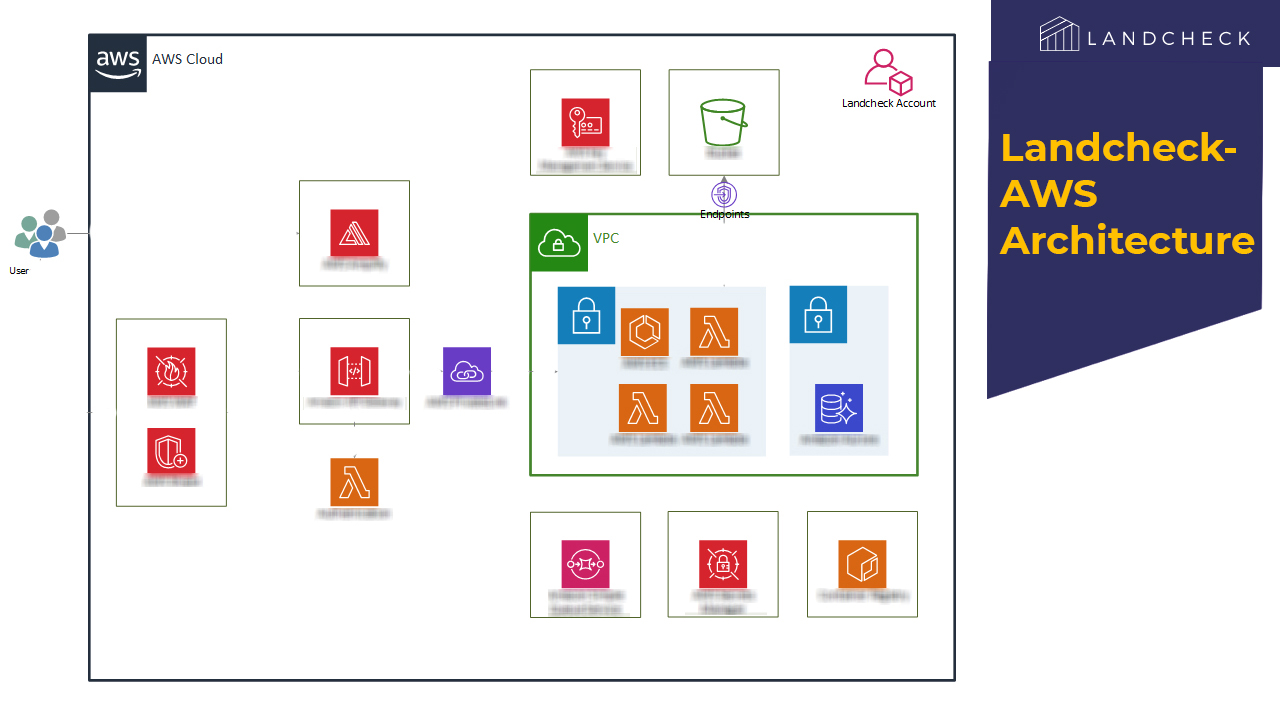
Technology and Architecture
Read more on the technology and Architecture we used for AWS Custom Application Development using ESRI ArcGIS
Technology
The web app was deployed with the below technological component
- Backend Code: .NET Core, C#
- Web App code: ReactJS
- Database: PostgreSQL
- Cloud: AWS
Integrations
- Google APIs
- LINZ database
- ESRI ArcGIS
- Stripe
- Auth0
- SendGrid
Security:
- AWS WAF service is used for the firewall
- All API endpoints are token based
Responsive Design:
- All screens and UX was done keeping in mobile usage and are implemented with a responsive design in mind.
Scalability
Application is designed to be running on serverless services, so that it can easily scale up and down automatically based on usage.
Cost Optimization
Alerts and notifications are configured in the AWS to notify if the budget is being exceeded. Being deployed on serverless infrastructure, it desn’t imposes any additional cost if application is not being used a lot. Peritos being a cloud partner is managing the environment for the client keeping a close watch on the cost and finding ways to optimize the same
Backup and Recovery
- Automated backups are configured to backup the database and store multiple copies of the backup.
Code Management, Deployment
- CI/CD is implemented to automatically build and deploy any code changes.
Features of Application
- Search for an address, if the address is under supported regions then user will be able to select the address and application shows the outline of property in aerial view.
- User can get the report by creating an account on the application and making the payment
- Get the rating for the property for multiple hazards, like Winds, Flooding, Volcano, Earthquake etc. and expert advice from Landcheck Engineers on what are the remedial actions and next steps to take.
- This application, backend and front end are powered by AWS services.
Challenges
We collated data from multiple council region and helped to get this stored on AWS layer. When a user buys the report, then the risk calculation logic goes through several datasets in ArcGIS server to calculate the risks for different hazards, then combine those results along with the expert advise from the Landcheck engineers and returns the result by generating a PDF. This was taking a huge amount of time when done at the go.
- Complex calculations are required for each hazard which involves data coming from different ArcGIS feature layers. In addition to this, an image for each hazard is also created combining multiple hazard layers from ArcGIS map server. All of these calculation were taking a lot of time in generating the report. In order to resolve this, we moved all the hazard calculation logic in a separate component, which gets triggered through an event. In this we optimized the code to perform each hazard calculation on separate thread. Also, we offloaded some of the GIS calculations to ArcGIS server, and access it with ArcGIS APIs. These changes reduced the time report creation time to just few minutes.
- Testing of the application with multiple addresses and users who were experts in their domain was a challenge.
- The data was quite complicated to understand and we relied on the Landcheck’s engineers to inform us what the expected result was. We did cover a lot of suburbs and did test close to 600 properties so we could be sure it is working as expected. However there were outliers and cases which did not work as expected and had to invest a fair bit of time to resolve those.
- ArcGIS integration was an issue as all the data from different Parcel and Linz layers had to be collated on the AWS ArcGIS server so we could get the information from a single source for multiple cities and suburb region
- This data was complicated to load and we had applied layers in terms of images and legends to display the data on the report side for an end user to easily interpret the results.
Support
As part of the project implementation we provide 2 months of Ongoing extended support. This also includes 20 hrs a month of development for minor bug fixes and a SLA to cover any system outages or high priority issues.
Next Phase
We are now looking at the next phase of the project which involves:
- Ongoing Support and adding new features every Quarter with minor bug fixes
- Adding support for more NewZealand cities
About Client
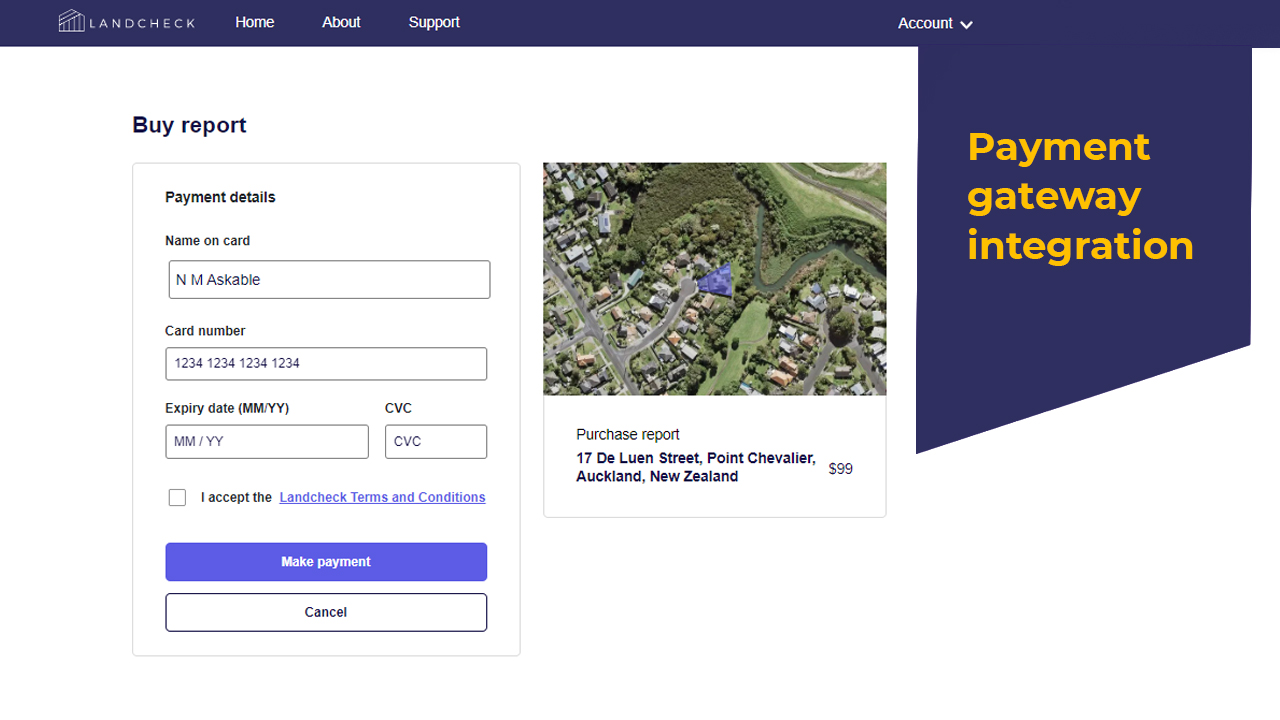
The customer’s (Tonkin + Taylor) business is involved in environmental consulting or meteorological services, focuses on providing high-resolution meteorological data for various applications, including air quality analysis, weather forecasting, and climate risk assessment. Their offerings are centered around advanced data modeling using the Weather Research Forecasting (WRF) model, which requires significant computational resources due to its ability to generate detailed meteorological datasets.
Project Background – AWS Custom product for Weather research forecasting
Peritos was hired to address these challenges by developing a comprehensive system that could:
- Efficiently run the WRF model using HPC cluster.
- Automatically create and manage HPC cluster jobs on receiving new data requests.
- Automatically manage data resolution adjustments.
- Provide a seamless experience for customers through an easy-to-use online platform.
- Enable the commercialization of the datasets, ensuring that the customer could capitalize on the broad applicability of their data across multiple disciplines
Implementation
Technology and Architecture
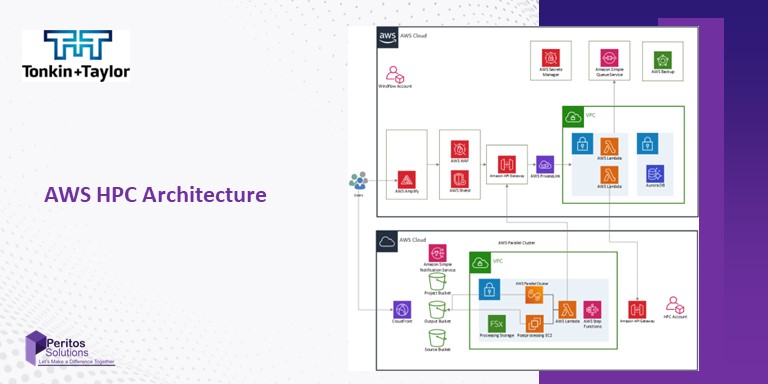
The architecture of this application efficiently handles the computational intensity of the WRF model, scales dynamically with demand, and provides a seamless experience for users. The integration of various AWS services ensures that the solution is robust, secure, and scalable.
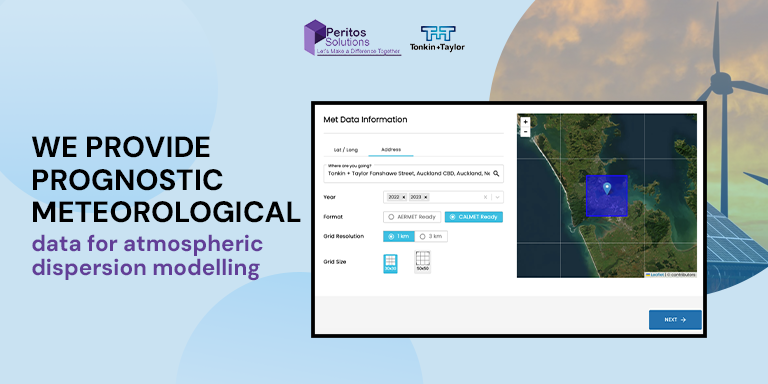
Overall Workflow
- User Request: Users input data parameters and request pricing. If satisfied, they proceed with the purchase.
- Processing Trigger: Upon payment confirmation, the system triggers the data processing workflow.
- WRF and WPS Processing: The ParallelCluster performs the necessary computations to generate the meteorological data.
- Post-Processing: Any additional processing is done before the final data is stored.
- Download and Notification: Users are notified and provided with a link to download their processed data.
Technology
- The web app was deployed with the below technological component
- Backend Code: .NET, C#, Python
- Web App code: Nextjs
- Database: PostgreSQL
- Cloud: AWS
Integrations
- Google APIs
- Stripe
- Auth0
- SendGrid
- Slurm APIs
Cost Optimization
Peritos enhanced Tonkin + Taylor’s FinOps capabilities by designing a cost-efficient, scalable AWS architecture. We optimized compute resources using AWS ParallelCluster, implemented serverless automation with Lambda and Step Functions, and used Amazon S3 and FSx for Lustre for cost-effective data storage. The solution allowed Tonkin + Taylor to scale on demand, reduce infrastructure costs, and gain visibility into cloud spending. This enabled efficient monetization of meteorological data while maintaining control over operational expenses.
High-Performance Computing (HPC) Environment
- AWS ParallelCluster: Provides the compute infrastructure needed to run the WRF model and WPS processes. This cluster is set up dynamically and scaled according to the computational demands of the task, ensuring efficient resource usage.
- Head Node and Compute Fleet: The head node manages the compute fleet, which executes the high-compute WRF and WPS processes.
- Head Node and Compute Fleet: The head node manages the compute fleet, which executes the high-compute WRF and WPS processes.
Processing and Orchestration
- AWS Lambda Functions: Used extensively for orchestrating various steps in the data processing workflow.
- AWS Step Functions: Orchestrates the entire workflow by coordinating Lambda functions, managing state transitions, and handling retries or errors.
Features of Application
- The solution leverages AWS cloud services to generate, process, and distribute high-resolution meteorological data.
- Users interact via an interface hosted on AWS Amplify, secured by AWS WAF and Shield, with APIs managed by Amazon API Gateway.
- The system orchestrates data processing using AWS Lambda functions and AWS Step Functions, coordinating tasks such as WRF and WPS processing on an AWS ParallelCluster.
- FSx for Lustre provides high-performance storage, while Amazon S3 and Aurora DB handle data storage and transaction management.
- Post-processing is done on EC2 instances, with notifications sent via SNS. The solution efficiently manages the high computational demands of the WRF model, scales dynamically, and ensures secure, seamless data access for internal and external users.
Challenges
- Challenge 1: High Computational Demand: The WRF model’s capacity to produce highly detailed meteorological datasets necessitates extensive computational power, which made running it on the customer’s existing local infrastructure impractical. The challenge was to find a solution that could efficiently handle large-scale data generation with optimum costing.
- Solution: This challenge was met by implementing an AWS-based high-performance computing (HPC) cluster, specifically AWS ParallelCluster, which provided the necessary computational resources to run the WRF model efficiently. The jobs on ParallelCluster were created and managed dynamically using AWS Stepfunction and AWS Lambda by utilizing Slurm APIs.
- Challenge 2: User Experience and Commercialization: To monetize their meteorological data, the customer needed to create an accessible, user-friendly portal where external users could easily select regions, adjust data resolution, and purchase datasets. The portal needed to be intuitive, efficient, and fully capable of handling secure transactions, which was essential for the success of the customer’s business model.
- Solution: The customer addressed this challenge by developing a web-based portal using AWS Amplify, integrated with AWS WAF and Shield for security, and managed via Amazon API Gateway. This platform provided a seamless user experience, enabling external customers to effortlessly interact with the system, select their data parameters, and complete purchases, thereby facilitating the commercialization of their datasets and enhancing revenue streams.
Next Phase
- Ongoing Support and adding new features every Quarter with minor bug fixes
- Adding support for more countries
Executive Summary
About Client
Machineroad was started by Mitch Ferguson and Lockie Fergsuon both on top of thier cricketing skills and with the right knowledge and tools helping others in developing the game skills is what they wanted to do in Machineroad. With the mobile application goal was to help athletes to see how fast they can bowl and the areas for thier improvement. The competition in the sports sector is cut-throat and this app helps amateur as well as professional athletes to up their games.
https://www.machineroad.com/
Location: Auckland, New Zealand
Project – AI ML based mobile app for cricket training
Machineroad requirement was for implementing a bespoke AI ML based mobile app that helps to improve cricket bowling skills for their users. They wanted an app that helps their users to measure their bowling speed and creates a trajectory image snippet for the end user which further helps to understand the areas of improvement. Machineroad needed detailed analytics to help the users see their activities and compare results each week and month to help keep a track on the progress made. The requirement for AI ML based mobile app for cricket training was to be launched on both iOS and Android Store.
The Founder of MachineRoad Lockie Ferguson as world class cricket champion had this vision in mind ‘We want to bridge the gap between talent and success as a sportsman. Regardless of your upbringing we want you to be able to compete on the world stage and become the best athlete you can be”
Scope & Requirement
Below was the scope of work to develop a Cricket Training app:
- User should be able to download the app from Play and Google store if the device meets the specific requirement of camera and Video processing.
- User can then calibrate and start taking video when doing bowling and the app guides on the right placement and setup so as to get the most accurate video for processing and calculating the speed.
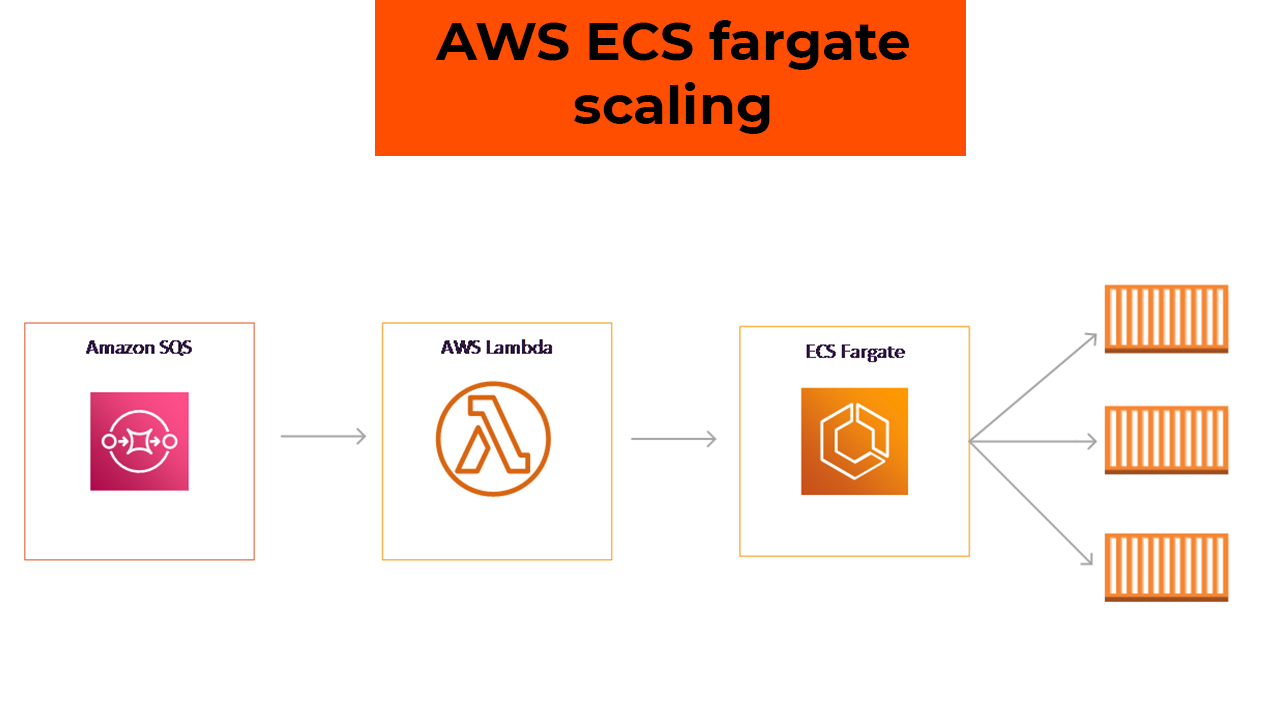
- AI and ML based video processing to give accurate results for the speed and if it there are issues like objects etc detected on the video it then informs the user that speed could not be calculated.
Implementation
Technology and Architecture
Technology
- The Mobile app was deployed with the below technological component
- Backend Code: .NET Core, C#, Node.js
- Mobile App code: Native Android, Native iOS
- Database: SQL Server, MongoDB
- Cloud: AWS
Integrations
- Single Sign-on using Auth0
- Sendgrid for sending email notifications
- Single Sign-on using Auth0
Security
- Data Encryption
- Multi-Factor Authentication for Admin, Teacher, and Students
- All API endpoints are tokenized
Backup and Recovery
Cloud systems and components used in the attendance management system are secure and 99.99% SLA.
HA/DR mechanism is implemented to create service replicas.
Scalability
Application is designed to scale up to 10x the average load from the first 6 months,
with auto-scaling cloud resources.
Cost Optimization
Alerts and notifications are configured to monitor budget usage. The environment is actively managed
to optimize costs.
Code Management & Deployment
Code for the app is handed over through Microsoft AppCenter.
CI/CD is implemented to automatically build and deploy code changes.
Features of AI ML Based Mobile App for Cricket Training
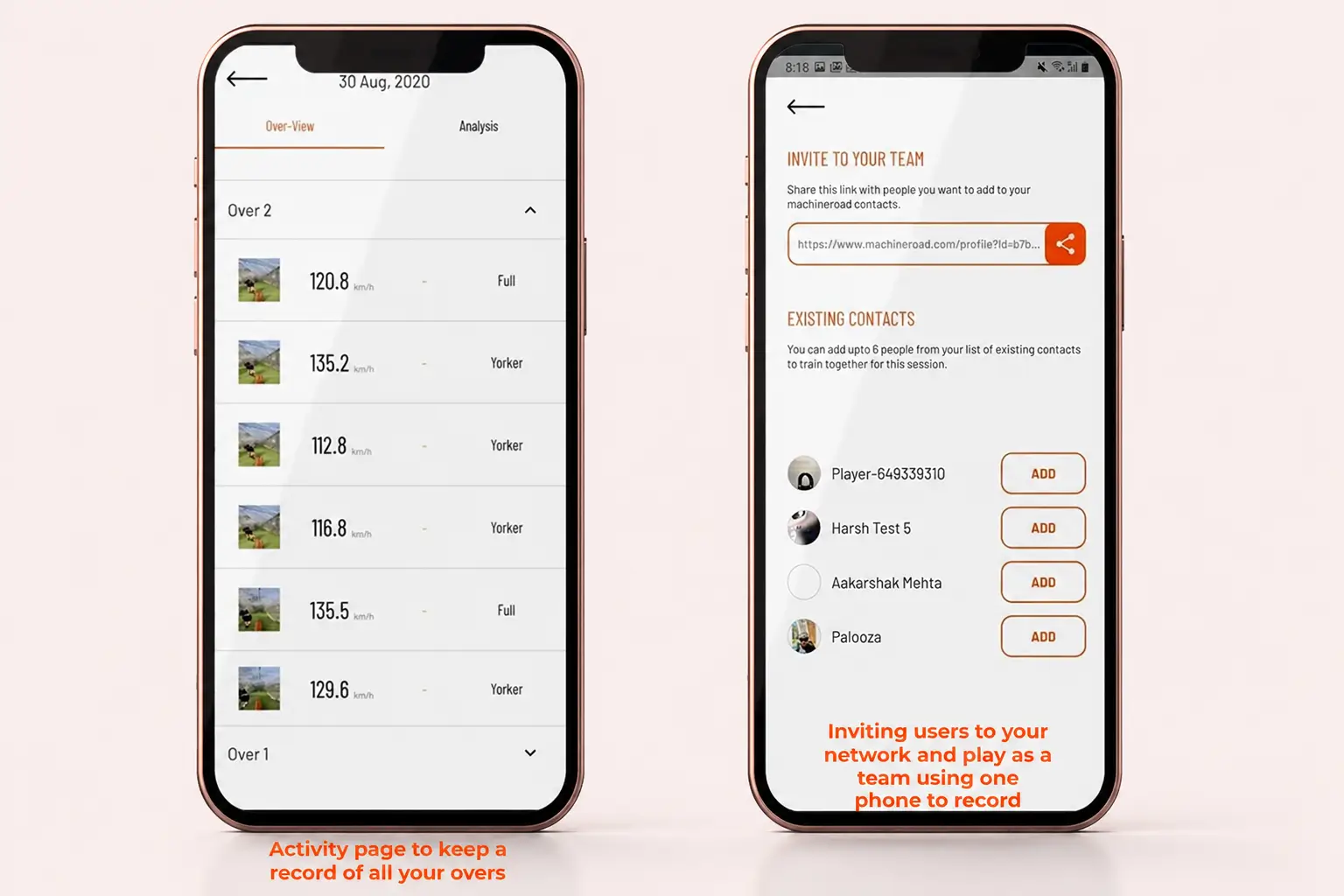
- Users can create bowling videos, store data, and add it to their player profile on the Machineroad app.
- The app records bowling speed, line, length, and trajectory, saving images and videos for each session.
- Detailed analytics reports allow weekly and monthly progress comparison, including benchmarking with other users and professional athletes.
- Monthly subscription includes comparison charts and leaderboard submission for speed and videos.
- AI/ML-based video processing analyzes recordings and delivers speed accuracy comparable to a speed gun.
- Social media integration enables users to share training results, badges, and streaks.
- Gamification and leaderboard features motivate users with customizable performance targets.
Challenges – AI ML Based Mobile App
- Achieving accurate results with a single camera compared to hawk-eye systems using multiple cameras was challenging.
- Performance depended on background noise, camera position, and device quality.
- App restricted usage on devices without 240FPS or slow-motion support; supported device list was provided.
- Processing videos across varying environments, lighting conditions, and pitches was complex.
- ML models required training across multiple scenarios, but adapting to new locations and pitches remained difficult.
- Accurate camera alignment and orientation were essential for reliable results.
- Help screens and video tutorials were implemented to guide users for optimal usage.
Support
As part of the project implementation, we provided 1 month of extended support, including major and minor bug fixes.
Additional long-term support was also provided for select issues over the years.
Next Phase – AI ML Based Mobile App
We are currently planning the next phase of development and are in the POC stage.
- Video post-processing will be performed directly on the mobile device to deliver faster results to users.
- New features will be implemented and released as part of the ongoing support agreement.
Peritos is a team of highly skilled developers, technical experts, and delivery managers. We’ve been very impressed with their commitment. Their developers and delivery managers have conducted themselves with professionalism and diligence at all times, and the quality of the work they have performed has been excellent. Many times, they proposed better solutions, which resulted in better and faster products. Peritos is a reliable AWS Partner. You can trust and be satisfied.

“We are very happy with the results of this major IT project with Peritos Solutions. Their staff gained a good knowledge of our business and processes. They were able to work with many of our diverse team members and launch Business Central ERP on time and on budget according to our requirements. We will be using them again for future projects and additional development actions. Thank you!”

The project was completed on time and as per the agreed budget. The communication was excellent, as was the dedication to quickly turning around the required report development. The overall experience was good, and I would definitely work with the Peritos Team again.
 Recent Home
 Recent Home
 Recent Home
 Recent Home


Peritos is a team of highly skilled developers, technical experts, and delivery managers. We’ve been very impressed with their commitment. Their developers and delivery managers have conducted themselves with professionalism and diligence at all times, and the quality of the work they have performed has been excellent. Many times, they proposed better solutions, which resulted in better and faster products. Peritos is a reliable AWS Partner. You can trust and be satisfied.
“We are very happy with the results of this major IT project with Peritos Solutions. Their staff gained a good knowledge of our business and processes. They were able to work with many of our diverse team members and launch Business Central ERP on time and on budget according to our requirements. We will be using them again for future projects and additional development actions. Thank you!”
The project was completed on time and as per the agreed budget. The communication was excellent, as was the dedication to quickly turning around the required report development. The overall experience was good, and I would definitely work with the Peritos Team again.
Recent Home
Recent Home
Recent Home
Recent Home

Peritos is a team of highly skilled developers, technical experts, and delivery managers. We’ve been very impressed with their commitment. Their developers and delivery managers have conducted themselves with professionalism and diligence at all times, and the quality of the work they have performed has been excellent. Many times, they proposed better solutions, which resulted in better and faster products. Peritos is a reliable AWS Partner. You can trust and be satisfied.
“We are very happy with the results of this major IT project with Peritos Solutions. Their staff gained a good knowledge of our business and processes. They were able to work with many of our diverse team members and launch Business Central ERP on time and on budget according to our requirements. We will be using them again for future projects and additional development actions. Thank you!”
The project was completed on time and as per the agreed budget. The communication was excellent, as was the dedication to quickly turning around the required report development. The overall experience was good, and I would definitely work with the Peritos Team again.
Recent Home
Recent Home
Recent Home
Recent Home


