

Executive Summary
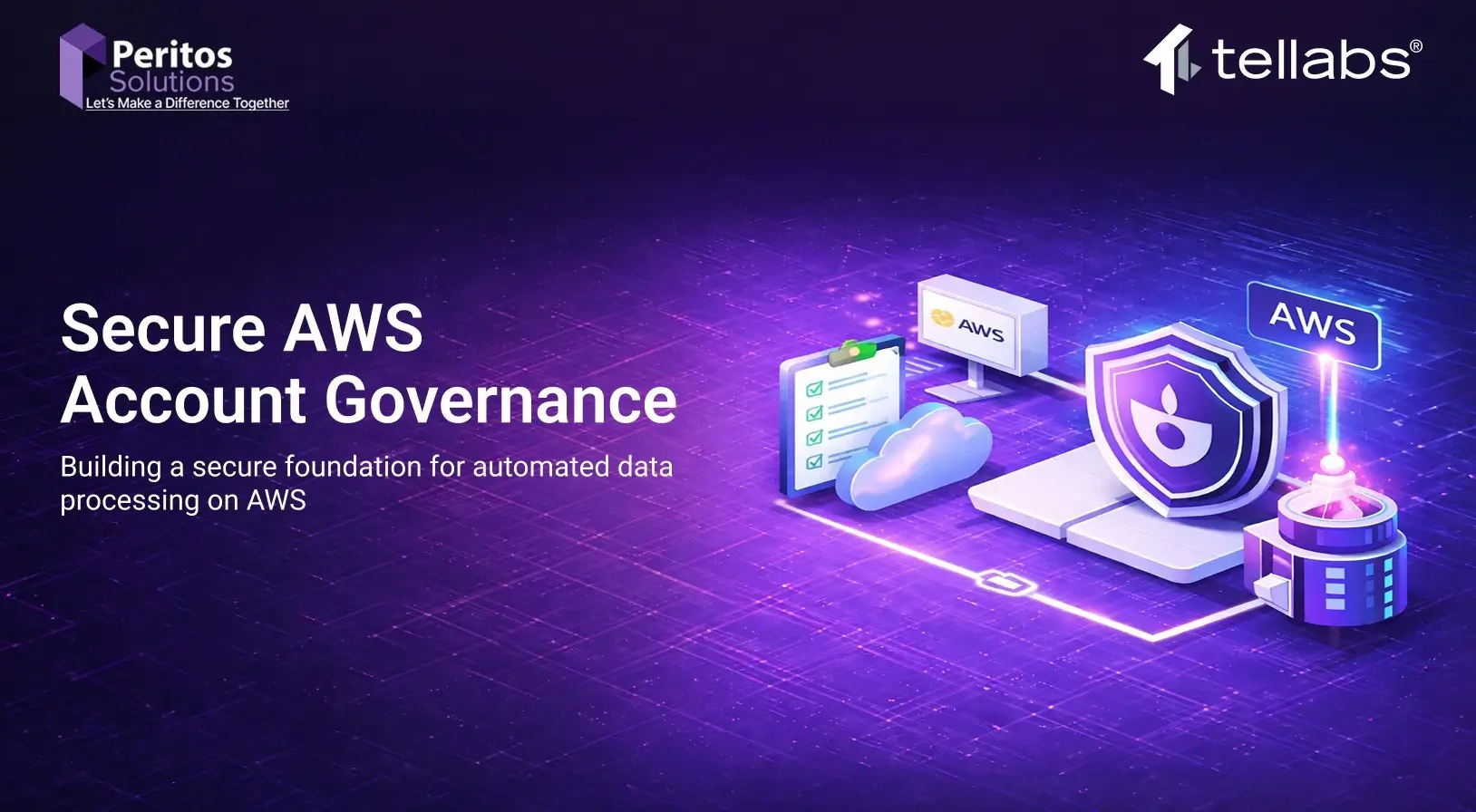
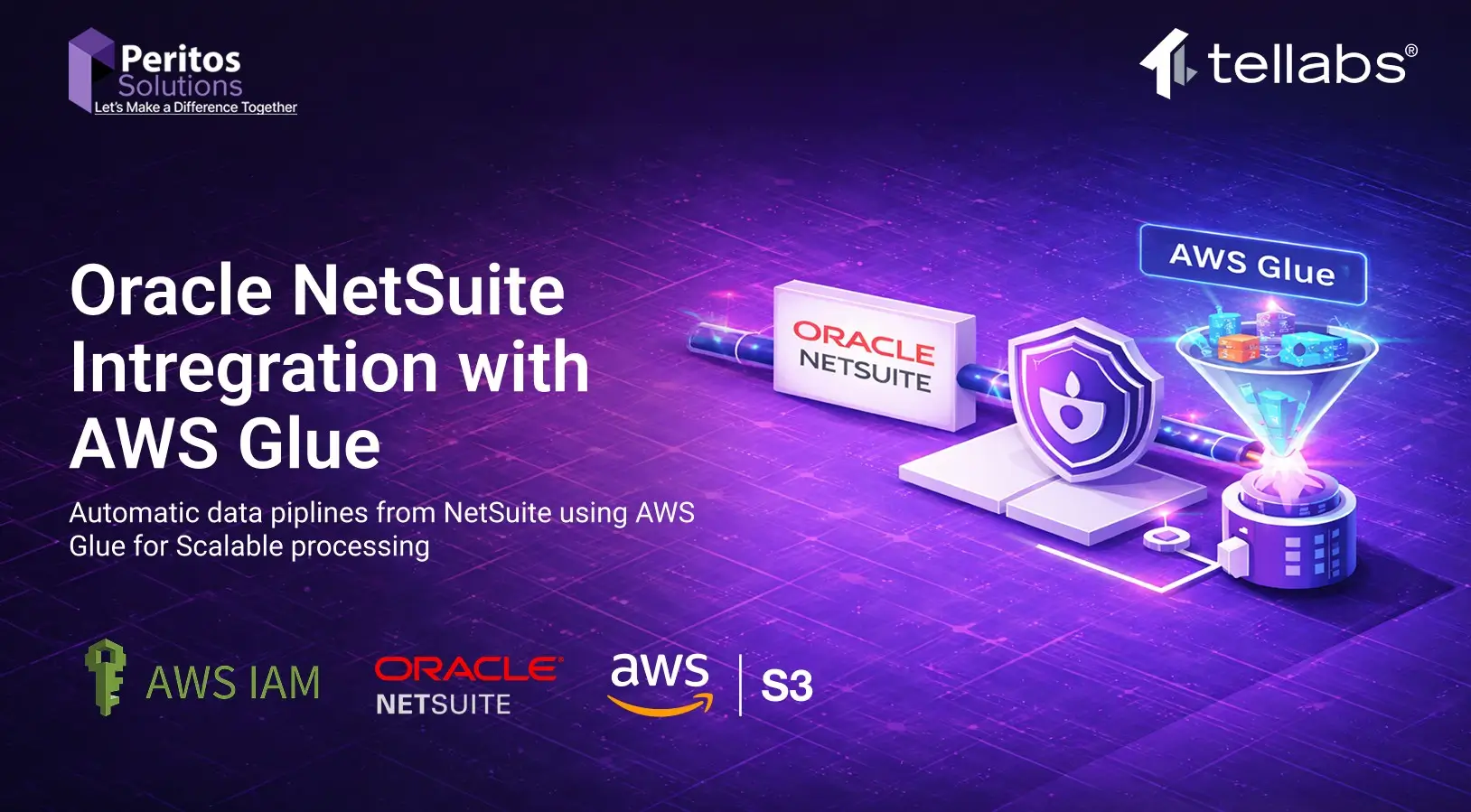
The Tellabs AWS Glue integration project was designed to establish a secure, scalable, and automated data integration pipeline between Oracle NetSuite and AWS. Leveraging AWS Glue, Amazon S3, and orchestration services such as Step Functions and EventBridge, the solution ensures efficient data extraction, transformation, and storage. The Objective was to build and implement automated ETL pipelines to ensure key reporting metrics are improved in terms of speed and accuracy.
A strong emphasis was placed on security, governance, monitoring, and automation, ensuring that all workloads align with AWS best practices. The implementation provides enhanced visibility, operational resilience, and cost optimization for data processing workflows.
About Client
Tellabs is a technology-driven organization requiring secure and scalable cloud infrastructure to support its data integration and analytics workloads. The customer needed a robust AWS-based solution to handle data ingestion from Oracle NetSuite while maintaining strict governance, security, and compliance standards.
Objectives
- Establish a secure AWS account governance model
- Enable seamless integration with Oracle NetSuite
- Implement automated ETL pipelines using AWS Glue
- Ensure high availability and performance monitoring
- Maintain secure access control and identity management
- Enable cost visibility and optimization for Glue jobs
Scope of Engagement
- AWS Account Setup & Governance
- Identity & Access Management (IAM / SSO)
- AWS Glue ETL Pipeline Development
- Monitoring & Logging Framework
- Network Security Implementation (VPC, SG, NACL)
- Deployment Automation using CloudFormation
- Cost Analysis & Optimization
- Runbook Creation & Operational Support
Architecture Overview
The architecture consists of:
- Source System: Oracle NetSuite
- Processing Layer: AWS Glue
- Storage Layer: Amazon S3
- Orchestration: AWS Step Functions & EventBridge
- Secrets Management: AWS Secrets Manager
- Monitoring: Amazon CloudWatch & CloudTrail
This architecture ensures scalability, automation, and secure data processing pipelines.
Solution Overview – To implement automated ETL pipelines using AWS Glue
The solution integrates Oracle NetSuite with AWS using Glue-based ETL pipelines. Data is extracted, transformed, and stored in S3, enabling downstream analytics and reporting.
Key capabilities:
- Automated ETL workflows
- Event-driven execution using EventBridge
- Secure credential handling via Secrets Manager
- Centralized logging and monitoring
- Scalable serverless architecture
Security & Governance
AWS Account Governance SOP
- Root account restricted to initial setup only
- Mandatory MFA enabled on root account
- Use of corporate email & contact details
- CloudTrail enabled across all regions
- Logs stored in secure S3 bucket with deletion protection
Identity & Access Management
- Principle of Least Privilege
- Use of IAM roles & temporary credentials
- Integration with AWS SSO / Active Directory
- No wildcard permissions in policies
- Individual access accountability
Network Security (VPC)
- Security Groups for controlled traffic
- Subnet-level control via Network ACLs
- Restricted DB access to application layer only
- Controlled internet access pathways
Data Security
- Encryption using AWS KMS CMKs
- SSL/TLS for data in transit
- Key rotation enabled
- Fine-grained access control policies
Implement automated ETL pipelines using AWS Glue and ensure to manage Security and Access control
Monitoring & Logging
- CloudWatch Dashboards for:
- Glue job performance
- Step Functions execution
- EventBridge events
- CloudTrail for audit logging
- Logs exported to Amazon S3
- SNS alerts for:
- Job failures
- Latency spikes
- Credential access issues
Implement automated ETL pipelines using AWS Glue and ensure monitoring and Observability by automating data pipelines
Implementation
Infrastructure as Code
- AWS CloudFormation used for:
- Infrastructure provisioning
- Security configurations
- Networking setup
CI/CD Automation
- Integrated with AWS CodeBuild
- Automated deployment pipeline
- No manual console changes
Glue Implementation – automated ETL pipelines using AWS Glue
- ETL jobs configured with optimized DPUs
- Logging enabled for all executions
- Job performance tracked via CloudWatch
Runbook & Troubleshooting
Routine Monitoring Tasks
- Monitor AWS Lambda execution metrics
- Check API Gateway latency & security logs
- Review Aurora DB performance metrics
Troubleshooting Scenarios
Lambda Errors
- Analyze CloudWatch logs
- Adjust timeouts/configurations
API Gateway Latency
- Identify backend bottlenecks
- Optimize integrations
Aurora DB Issues
- Optimize queries & indexing
- Resolve connection bottlenecks
High Latency Scenario (OPE-001)
- Trigger incident response
- Identify root cause
- Apply performance optimizations
Deployment Readiness Checklist
Testing
- Unit Testing
- Integration Testing
- System Testing
- User Acceptance Testing (UAT)
Automation
- CI/CD pipelines
- Automated testing frameworks
- Security & code quality scans
Documentation
- Deployment guide
- Rollback strategy
- Configuration records
Validation
- Pre & post deployment checks
- Deployment checklist completion
- Evidence of successful rollout
Cost Optimization & Performance Tuning for running and implementing automated ETL pipelines using AWS Glue
- Glue pricing based on DPU usage & runtime
- Cost analysis using:
- CloudWatch logs
- AWS Cost Explorer
- Optimization strategies:
- Reduce over-allocated DPUs
- Use Glue Python shell jobs for smaller workloads
- Enable job bookmarks to avoid reprocessing
- Automation via:
- boto3 scripts
- Athena-based reporting
Challenges & Resolutions
| Challenge | Resolution |
| Secure access management | Implemented IAM roles & SSO |
| Monitoring complexity | Centralized CloudWatch dashboards |
| Cost visibility | Implemented tagging & cost analysis |
| Data security compliance | Used KMS CMKs & encryption |
| Deployment consistency | Adopted CloudFormation IaC |
Project Completion
- Successfully deployed automated ETL pipelines
- Established secure AWS governance model
- Enabled real-time monitoring and alerting
- Improved performance and reduced operational risks
- Delivered scalable and maintainable architecture
Note
This implementation follows AWS best practices for:
- Security
- Reliability
- Performance Efficiency
- Cost Optimization
- Operational Excellence
Implement automated ETL pipelines using AWS Glue high-level system setup.
Reference Links
https://docs.aws.amazon.com/prescriptive-guidance/latest/patterns/build-an-etl-service-pipeline-to-load-data-incrementally-from-amazon-s3-to-amazon-redshift-using-aws-glue.html
Read more about Glue
https://aws.amazon.com/glue/
Read more here about our services
AWS Glue Services
- https://www.peritossolutions.com/services/aws-glue-serverless-data-integration/
AWS consulting Services
- https://www.peritossolutions.com/aws-consulting